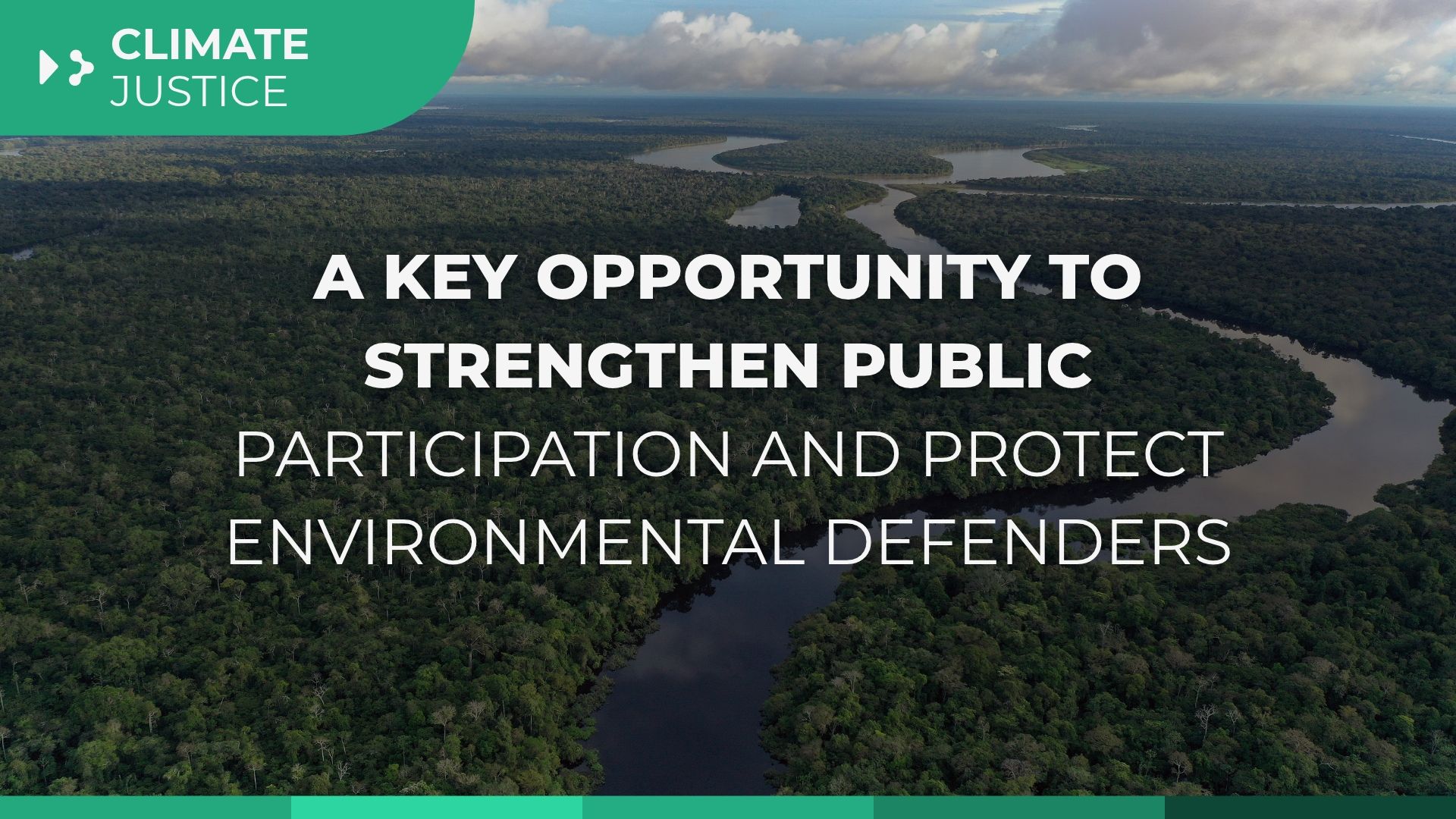
The election process for Representatives of the Public of the Escazú Agreement for the 2026–2030 term represents a key opportunity to consolidate citizen participation in environmental governance in Latin America and the Caribbean. It is currently in its final stage, with electronic voting scheduled for November 10 and 11, 2026. With more than 100 accepted nominations from 22 countries, this figure represents a significant increase compared to the 58 nominations in 2022. Additionally, 11,059 people are currently registered to vote.
This call for nominations puts into practice one of the major advances of the Escazú Agreement, by providing for binding public participation in all decision-making processes that may have a significant impact on the environment. To give effect to this right, the Conference of the Parties (COP)— created by the Agreement to review and promote its implementation and effectiveness— established the election of six Representatives of the Public to act before the Agreement’s bodies and meetings. This electoral process facilitates citizen advocacy and strengthens the link between the treaty’s decisions and the people and communities whose rights it seeks to protect.
The requirements for candidacy are: being a national or resident of one of the States eligible to participate in the Agreement; being registered with the Regional Public Mechanism (a platform that facilitates participation, transparency, and the dissemination of information); and not having worked in any branch of government in the preceding 12 months. In addition, the procedure incorporates criteria for gender parity and territorial representation. To this end, the region is divided into three electoral subregions, each of which elects two representatives who cannot share the same gender, nationality, or place of residence, thereby ensuring a pluralistic and diverse composition.
At CEJIL, we have stated that the selection and composition processes of international human rights mechanisms are a fundamental aspect of strengthening their legitimacy, independence, and effectiveness. Our experience with the Inter-American Human Rights System, including our efforts to promote more transparent and participatory selection processes, has allowed us to identify lessons that can contribute to strengthening other regional mechanisms. While these are different mechanisms, there are shared principles that can guide these processes, such as transparency, informed participation, diversity, and public trust.
At the international and regional levels, various standards link transparency and representativeness to institutional legitimacy. In the Inter-American system, resolutions of the OAS General Assembly promote open and participatory nominations, gender parity, and balanced representation across geographic regions and legal systems. The 2023 and 2025 reports of the Inter-American Commission of Women (CIM), prepared at the request of the General Assembly with technical support from the GQUAL campaign, recommend publishing vacancies and selection criteria, facilitating civil society participation, providing justification for nominations, and guiding voting toward equitable and representative representation. Reforms to various statutes complement these advances with measures to promote gender-balanced candidacies.
At the UN, resolutions of the Human Rights Council and the report of its Advisory Committee promote transparent processes, gender balance, and equitable geographical distribution, along with competence and independence, and recommend measures to address the underrepresentation of women in human rights bodies. Specifically, regarding the standard of gender parity, General Recommendation No. 40 of the Committee on the Elimination of Discrimination against Women (CEDAW) establishes parity as the measure of equality to which States and international institutions are bound for the composition of international bodies. This standard, along with specific recommendations for achieving it, is also elaborated upon by the CIM in its Model Law on Parity.
Although these instruments have specific scopes of application, they offer valuable guidance for continuing to strengthen regional participation mechanisms. In this regard, the rules on gender parity and subregional representation already incorporated into the Escazú electoral procedure constitute an important foundation for further progress in the areas of transparency, inclusion, and informed participation.
In the case of Escazú, the legitimacy of representation depends not only on the conditions under which the election takes place, but also on the ability of elected officials to maintain an ongoing dialogue with the public, address their concerns, and promote pluralistic and effective participation during their term of office. Strengthening electoral procedures presents an opportunity to consolidate representative mechanisms that are close to the people, accessible, and accountable.
A key aspect of the Escazú electoral process is that the voter registry report shows higher levels of participation in certain subregions. Subregion 1 (South America) accounts for 81% of the electorate and 85 candidacies; Subregion 2 (the Caribbean) represents barely 1% of the voter registry with only 3 active candidacies; and Subregion 3 (Mexico, Central America, Cuba, Haiti, and the Dominican Republic) holds 17% of the voter registry and 17 candidacies. This highlights the importance of continuing to strengthen outreach and participation strategies, taking into account the specific characteristics of each subregion and the barriers to engagement that certain communities may face.
Other expert election and nomination processes for international mechanisms offer valuable practices that could strengthen the development of Escazú procedures. Issuing broad public calls at national and regional levels, launching open calls for applications, and utilizing diverse dissemination channels—to amplify official website announcements while coordinating with specialized press, academic networks, professional associations, community organizations, and local media—can expand outreach to underrepresented areas.
Furthermore, building on this experience, standardizing and publishing resumes using uniform CV formats and eligibility forms could facilitate direct comparison of profiles and promote a more informed vote.
Finally, civil society’s experience with the Inter-American System, including the formation of independent panels to evaluate candidates for its bodies, has also helped promote standards of transparency and public scrutiny. Despite its differences from the Escazú procedure, this example highlights the importance of having clear rules, sufficient public information, and safeguards to identify and address potential conflicts of interest.
In addition to these considerations, it is important to strengthen communication and accountability mechanisms throughout the term of office. Public participation should not end with the election; rather, there should also be effective channels through which individuals and communities can communicate their concerns, learn about the activities of their representatives, and contribute to shaping the agendas discussed within the framework of the Agreement.
The Escazú Agreement represents a fundamental step forward in guaranteeing the rights of access to information, public participation, and justice in environmental matters, as well as in protecting human rights defenders working on environmental issues. The consolidation of its mechanisms presents an opportunity to translate these commitments into increasingly effective and inclusive participation. At CEJIL, we reaffirm our commitment to contributing to this process by drawing on the lessons learned from our experience in strengthening international human rights mechanisms and by recognizing the unique innovations of this agreement.
Ahead of the upcoming election of Representatives of the Public, it is essential to promote informed and broad participation among eligible voters, as well as to continue strengthening the conditions so that those elected can exercise pluralistic and responsive representation during their term. Strengthening public participation, transparency, and trust in its institutions also helps ensure that the Agreement increasingly meets the needs of the people and communities whose rights it seeks to guarantee.