

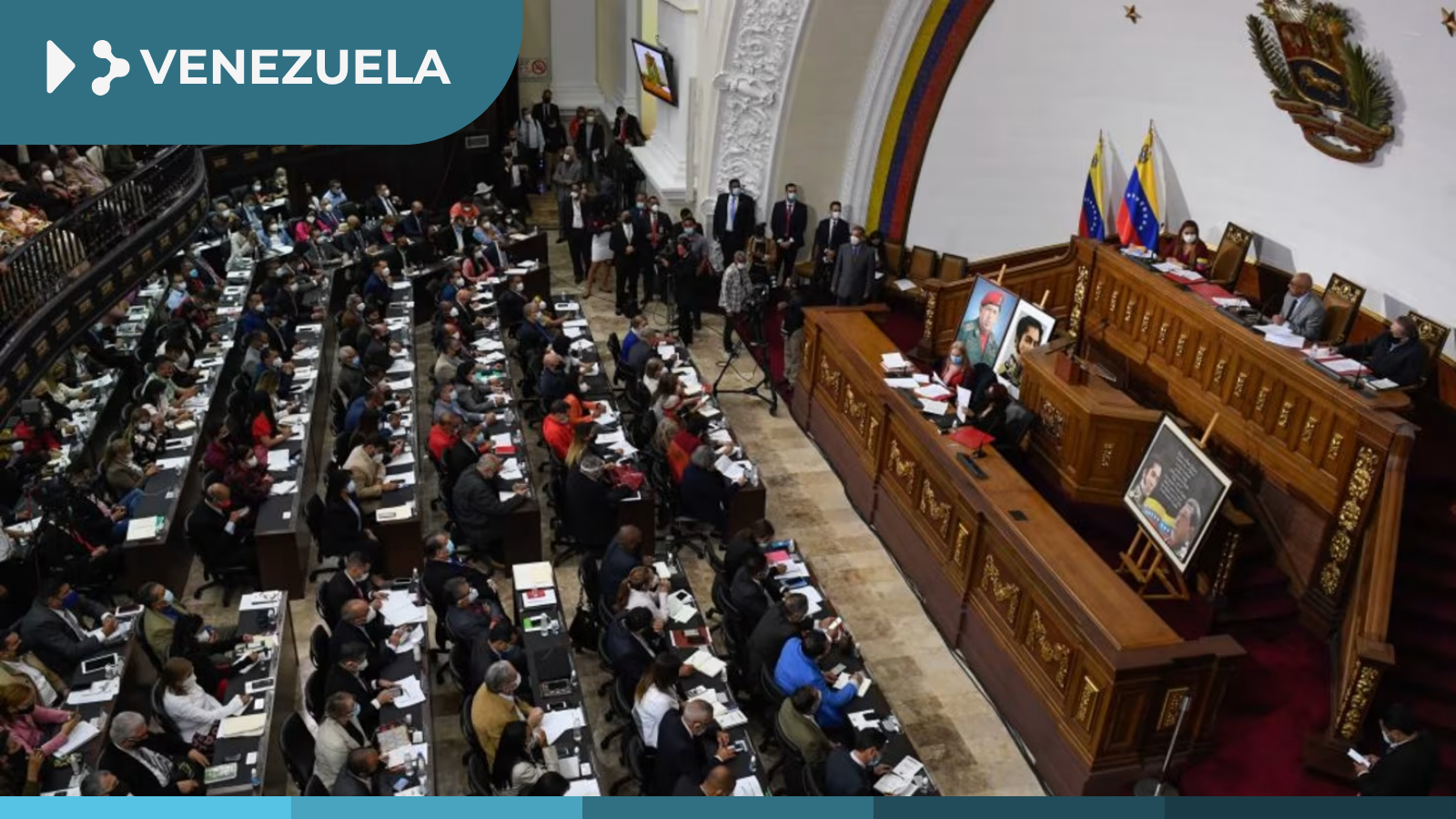
Washington, D.C., 30 September 2026. In light of the proposal to amend the Constitutional Law Against Hatred, for Peaceful Coexistence and Tolerance, submitted to the National Assembly on 29 September, the contents of which remain unknown, the undersigned civil society organizations reiterate our demand that this law be repealed.
Since its adoption in November 2017, this law has been criticized for its incompatibility with international human rights standards. Among its most significant shortcomings are the disproportionate criminal penalties it establishes and the vagueness, ambiguity, and overbreadth of its criminal offenses, in violation of the principle of legality. This has enabled the criminalization of hundreds of individuals on accusations of “incitement to hatred.” However, the problems posed by this law extend beyond its criminal provisions and cannot be resolved through a reform proposal that, according to public announcements, seeks only to decriminalize the conduct it currently criminalizes.
The Law Against Hatred suffers from a fundamental defect of origin: it was not enacted by the National Assembly, the body constitutionally empowered to legislate. Its adoption was not preceded by public debate or a consultation process with civil society. Moreover, it was approved in the context of severely repressed protests and amid an official narrative stressing the need to “restore peace” and combat “hatred,” but which in practice created conditions for restricting or sanctioning expressions of criticism, dissent, or opposition to the Government. As a result, from its inception, the law has been imbued with a logic that portrays dissenting expression as a threat to peaceful coexistence.
Even before its adoption, civil society organizations warned that this law could be used to persecute human rights defenders, journalists, and media outlets. These concerns have repeatedly materialized, as documented by the Inter-American Commission on Human Rights (IACHR), the Office of the United Nations High Commissioner for Human Rights (OHCHR), and the Independent International Fact-Finding Mission on the Bolivarian Republic of Venezuela. The latter recently warned that this law, together with the NGO Oversight Law and the Simón Bolívar Law, forms part of a legal framework whose continued enforcement has contributed to the ongoing closure of civic space in Venezuela.
The problems associated with the Law Against Hatred also stem from the obligations, restrictions, and non-criminal consequences it imposes in relation to conduct described in extremely vague terms and which it further declares, as a general rule, not subject to statutes of limitations.
The law prohibits media outlets from disseminating messages that the Government may regard as propaganda, incitement to hatred, or advocacy of hatred, without providing a clear definition of these concepts. This facilitates arbitrariness and may result in extremely severe consequences, including the revocation of broadcasting licenses for radio and television service providers, the blocking of websites, and the imposition of substantial fines.
Beyond these sanctions, the law enables the State to intervene directly in the content disseminated by media outlets. On the one hand, it provides for the free use of radio and television airtime to broadcast official messages; on the other, it mandates the removal and suppression of content published on social media platforms and other electronic media. The IACHR Special Rapporteurship for Freedom of Expression has found these provisions to be incompatible with freedom of expression and the requirements of a democratic society.
The law’s adverse effects also extend to the exercise of political rights and the right to freedom of association. The Law Against Hatred permits the deregistration of political parties that engage in activities or express ideas deemed by the Government to constitute incitement to hatred. Likewise, it prohibits the creation and operation of private legal entities, movements, and social organizations that engage in conduct ambiguously defined by the law. These provisions add to a broader legal framework that restricts and threatens the exercise of freedom of association, including by human rights defenders and their organizations.
For all these reasons, the undersigned organizations consider that a partial reform is insufficient to remedy the law’s foundational defects, disproportionate restrictions, and incompatibility with international human rights standards. We therefore call on the Venezuelan State to repeal this law and to review and repeal the other provisions that form part of the repressive legal framework that unduly restricts freedom of expression, freedom of association, and political participation.
We further call on States, multilateral organizations, and international human rights protection mechanisms to maintain close scrutiny of the effects of these laws and to urge the Venezuelan State to repeal, without further delay, the Law Against Hatred and all related provisions that are incompatible with its international obligations.